

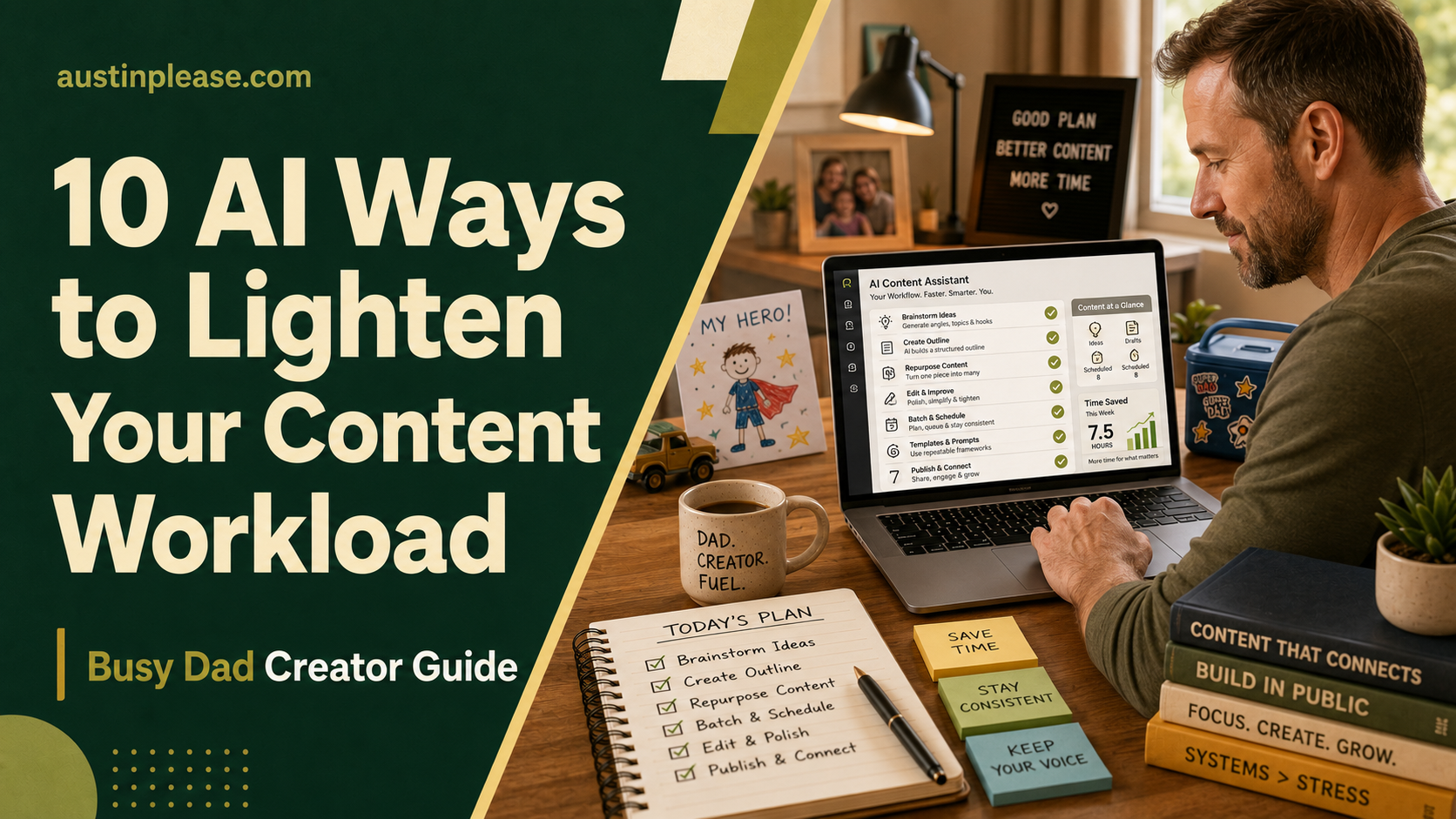
Hey there, fellow busy dad! If you’re trying to keep up with content while also managing a job, a family, and the general chaos of daily life, I get it. The workload can feel never-ending. It’s not usually a lack of ideas that burns people out. It’s the fact that everything takes so much manual effort.
Writing, editing, planning, posting, repurposing… it adds up fast.
That’s where AI can actually be helpful, but only if you treat it like an assistant sitting next to you, not some magical shortcut that does the work for you. The real win isn’t replacing your voice; it’s cutting down the busywork that drains your time.
Here are 10 realistic, genuinely helpful ways to lighten your load with AI, without turning your content into generic stuff everyone else is posting.
I don’t know about you, but staring at a blank page is one of the quickest ways to lose time. It’s like your brain freezes, and suddenly 30 minutes are gone.
What’s worked for me is using AI to brainstorm quickly, not to overthink. I’ll ask it to generate 15 or 20 topic ideas in a single prompt, then I'll choose the best two or three and move on.
The real trick is doing this in batches. If you sit down once a week and stockpile ideas, you’re not forcing yourself to come up with something fresh every single day. That alone can take a huge weight off.

One thing I’ve noticed is that creators don’t usually get overwhelmed because content is hard. They get overwhelmed because every post feels like starting from zero.
It’s exhausting to wake up and think, “Okay… what am I supposed to write today?”
This is where AI can actually help efficiently. You can ask it to build a simple weekly structure you can reuse, something like:
Nothing fancy, just a rhythm you can stick to.
When you have a predictable system, you spend less time deciding and more time creating. And honestly, reducing that daily decision fatigue makes content feel so much more manageable.
If I’m being honest, outlining is probably one of the best ways to use AI without losing your personal voice.
I don’t use it to write complete drafts for me. What I do use it for is getting a solid outline down fast, especially when my brain feels scattered.
You can ask AI to map out the main points, the flow, and maybe a few examples, and then step in and fill it with your own experience and opinions.
It’s like showing up to write with the roadmap already drawn out. It saves a ton of mental energy and helps you stay focused, rather than wandering halfway through the post.
One of the most significant mindset shifts for me was realizing you don’t need to create everything from scratch every time.
If you already recorded a YouTube video, you shouldn’t have to sit down and completely restart to make a blog post. That’s a fast track to working late every night.
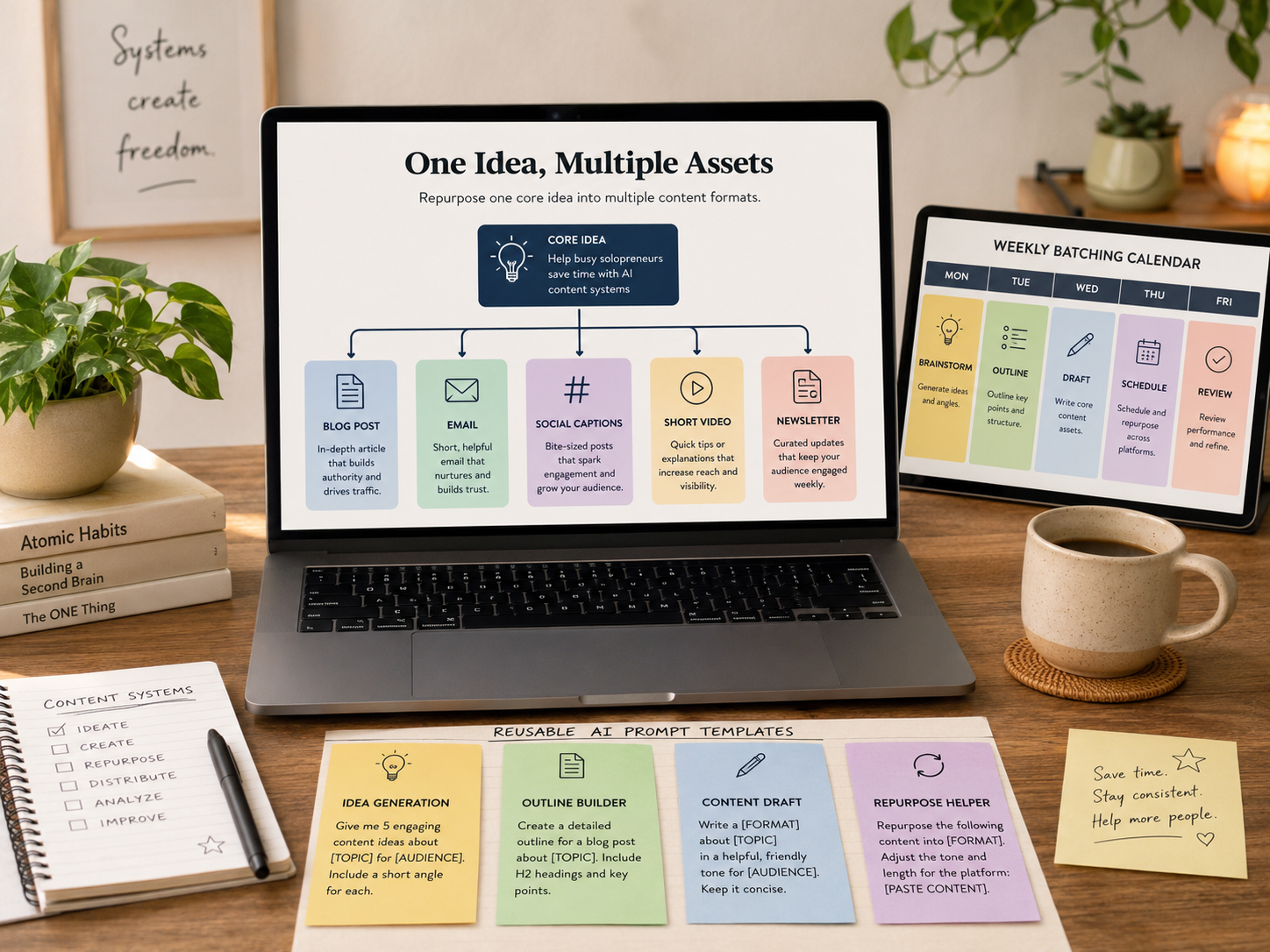
AI makes repurposing way easier. You can use it to turn:
This is honestly how people stay consistent without burning out. You’re not creating more, you’re just getting more mileage out of what you already made.
And as a busy person, that’s the whole game.
When I’m tired or juggling a million things, the most challenging part of writing isn’t the words. It’s figuring out how to start and what comes next.
That’s why simple frameworks help so much. They give your brain a structure to follow when you don’t have extra energy to wing it.
One easy one is the H.I.V.E.S framework:
You can even have AI draft a quick version of each section, then you go back and polish it so it actually sounds like you.
It’s a great middle ground. You get help with the structure, but you’re still the one bringing the personality and authentic voice.
Let’s be real, most busy parents or working professionals don’t have a random three-hour block to sit down and create content.
What we actually have are these little pockets of time, like 15 to 30 minutes here and there. And honestly, AI makes those micro-sessions way more usable.
For example, you can:
It doesn’t sound like much, but those small sessions add up fast when you have a straightforward workflow.
You’re not trying to do everything in one sitting. You’re just moving the content forward in manageable chunks.
Sometimes posting is more work than writing.
The content might be done, but then you still have to come up with a title, format everything, write the little extras… and that’s where a lot of time disappears.
This is a great place to let AI handle the repetitive stuff, like:
You’re still fully in control of what goes out. You’re just not wasting your brainpower on the tedious copy-paste tasks that don’t really need you.
And that alone can make publishing feel way less annoying.
If I had to pick the biggest long-term workload saver, it would be templates. No question.
The real relief doesn’t come from AI writing one post for you. It comes from setting up reusable formats, so you’re not reinventing the wheel every week.
AI can help you create things like:
Once you have those in place, creating content becomes more like filling in the blanks instead of starting from scratch every time.
It’s one of those “do it once, thank yourself later” moves.
This one’s big for me: trust comes from your perspective, not perfect wording.
People follow you because of how you think, what you’ve lived through, and the way you explain things. AI can’t replace that, and honestly, it shouldn’t try.
Where it does help is on the editing side. I’ll use it to check clarity, tighten up a paragraph, or simplify something that sounds too messy.
But I avoid copying complete generic drafts, because that’s where content starts to feel flat and forgettable.
The best workflow I’ve found is simple:
You write the core.AI cleans it up.
That way, it still sounds like you, just a little sharper.
This is probably the reminder most of us need: you don’t have to post every day.
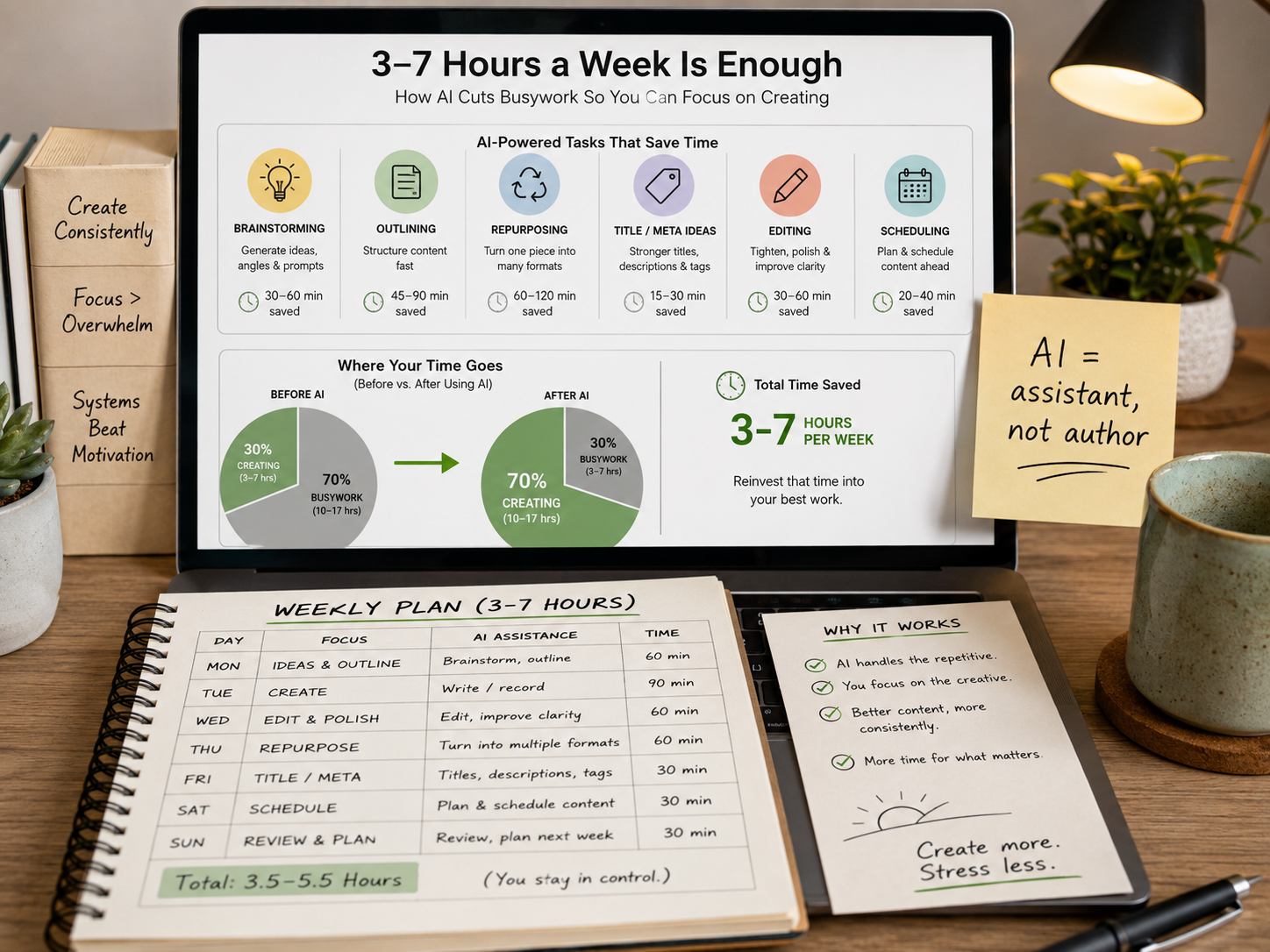
If you have the right systems in place, consistent content can take about 3 to 7 hours a week. That’s doable even with a full-time job, kids, or a busy life.
The difference isn’t talent or hustle. It’s the process.
Random content creation feels exhausting because you’re always scrambling. But a simple AI-supported workflow feels sustainable because you’re not doing everything the hard way.
AI isn’t here to replace your creativity. It’s here to protect your time.
And honestly, for busy professionals, parents, and side creators, that’s the real win.
If I’m feeling stretched thin, I try to remind myself: I don’t have to turn into a robot or lose my personality just to get more done. The goal is to make things easier, not harder.
I let AI handle the repetitive, heavy stuff so I can focus on sharing real experiences, the things people actually care about. Perfection isn’t the goal. Progress is. Even a few small changes can lead to much less stress and much more time for what matters most.
And honestly, on the days it still feels messy, I remind myself: I’ve got this.
Disclosure: I may receive affiliate compensation for some of the links below at no cost to you if you decide to purchase a paid plan. You can read our affiliate disclosure in our privacy policy. This site is not intending to provide financial advice. This is for entertainment only.


