

.png)
Hey there, busy dads. If you’re reading this between kid chaos and work calls, you’re exactly who this is for.
Most parents sign up for online courses hoping for side income or a personal brand. Then reality hits. Kids don’t respect lesson plans. Quiet hours disappear. Within two weeks, most people quit. Not from laziness, but because the course was never built for parents.
These programs assume long, focused blocks of time. Parents work in fragments. Three minutes here. Ten minutes there. One meltdown wipes out your progress. Then comes the guilt, even though the system is the real problem.
A few myths keep tripping people up. Motivation will carry you. Long videos build skill faster. Homework fits around family life. None of that holds up with kids.
What actually works is short bursts, clear checklists, and templates that cut thinking when you’re exhausted. Systems have to survive interruptions.
This article breaks down why most courses fail parents and what works instead. I’ll also show why Part-Time YouTuber Academy stands out by designing for chaos, not pretending it doesn’t exist.
Most online courses just aren’t built for parents. They’re designed for people with quiet rooms and uninterrupted time, not diaper changes and spilled juice. Forty-five minute videos sound reasonable until you’ve paused them ten times. No surprise completion drops to the floor.
Homework makes it worse. Assignments like “film three videos this week” crash straight into soccer practice and bedtime routines. I’ve seen parents staring at raw footage near midnight, then quietly giving up on most of it.
Another issue is overload. Modules dump dozens of tips with no clear priority. By the next morning school drop-off, it’s all gone. Without a simple “do this first,” paralysis kicks in.
Then there’s the decision fatigue. Writing hooks from scratch at 9 PM is brutal. Parents need templates they can use while washing dishes or recording quick voice notes, not blank pages.
Accountability usually disappears too. Life happens, progress stalls, and suddenly you’re restarting lesson one again without ever publishing anything.
Most courses blame time management. They ignore parent-tested fixes like 15-minute bursts, batching around naps, or interruption-proof checklists.
The result is wasted money and a lot of unnecessary guilt. Parents don’t need more motivation. We need systems designed for real family life, not corporate schedules.
Most online courses lean hard on motivation. “Just show up.” “Stay consistent.” That sounds nice until you’re awake at 3 AM with a kid who refuses sleep. Motivation doesn’t survive exhaustion. Processes do.
Processes are what carry you through chaos. A checklist lets you write one hook while waiting at the dentist. A template means no blank page at bedtime. You’re filling in proven structures, not forcing creativity when your brain is fried.
Parents do best with chunking. Fifteen-minute bursts. One clear action. Script a hook before the baby cries. Stop. Resume later. Long 45-minute sessions just don’t survive family life.
Prioritization matters too. Focus on the basics first: hook, problem, solution. Skip gear upgrades and fancy edits until later. Views come from clarity, not equipment.
Interruption-proof design is everything. Voice-note templates you can use in the kitchen. Batching four ideas during one nap. Progress that survives tag-team parenting and surprise meltdowns.
Motivation courses give quotes. Process-driven systems give checklists and repeatable outputs. I’ve seen parents pull 20 video ideas straight from meal prep or work expertise, then post weekly around school runs.
The results speak for themselves. Motivated students stall. Process-driven parents publish and grow.
If a course doesn’t respect family rhythm, skip it. Look for checklists over cheerleading, templates over theory, and systems that work with diapers in the room. That’s how real progress happens.
PYTA works because it’s built for real parent chaos, not ideal schedules. Everything runs on processes, not motivation. You get the Infinite Content Engine checklist and just follow it. I’ve seen parents batch four video ideas during one nap. No hype. Just boxes to tick.
The H.I.V.E.S framework makes scripting fast. You can record voice notes on school runs and fill in hook, interest, and value between dinner and bath time. Fifteen minutes. Done.
It also cuts gear stress early. The Ultimate Gear Guide basically says, use your phone and move on. People film in laundry rooms after bedtime and still grow. No lights. No excuses.
Idea generation is pulled straight from daily life. Sleep routines, budget meals, work-from-home hacks. Your normal week turns into endless content without brainstorming sessions.
When views start climbing, the Outsourcing Almanack kicks in. It shows exactly how to hire editors once you hit around 1,000 subscribers. Sample job posts included, which saves a ton of mental energy.
The schedule flexes around family life. Short lessons during cleanup. Voice scripting at the table. One batch filming session on the weekend. Interruptions are expected, not punished.
That’s the real difference. Every module ends with one clear action, so progress keeps moving even when kids melt down. Parents finish far more of this course than most others because it fits real life.
I’ve seen moms earn a few hundred a month around daycare schedules. Dads hit hundreds of subscribers teaching simple work hacks. PYTA doesn’t fight family life. It builds around it.
Parents actually finish this program. Around 70 percent complete the core modules, compared to roughly 15 percent in generic courses. The checklists force output even when life gets loud.
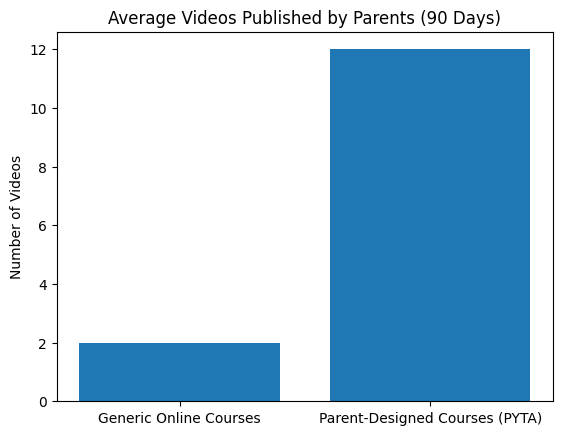
On average, PYTA parents publish about 12 videos in 90 days. Many hit 500 subscribers with solid retention. For some, that side income quietly covers daycare or groceries. No lifestyle overhaul required.
Compare that to motivation-heavy courses. Parents buy them, watch lesson one, then disappear. No videos. No revenue. Just guilt.
The parents who succeed here all say the same thing. It wasn’t willpower. It was having a system they could restart during the next nap. That’s what makes PYTA work when family life doesn’t slow down.
Before you buy any course as a busy parent, there are a few red flags I always look for. If you spot these, it’s usually a sign the program won’t survive real family life.
First, long videos. Anything over 20 minutes is a problem. No parent watches 45-minute lectures straight through. Good courses break lessons into short chunks and end with one clear action you can actually finish.
Second, homework that needs quiet focus. Assignments like “research 20 competitors” fall apart during the dinner rush. If there are no voice-note options, checklists, or templates, it’s not parent-friendly.
Third, motivation over systems. Pep talks and quotes sound great until a 3 AM wake-up. What lasts are repeatable frameworks, not hype. You want processes you can restart, not speeches.
Fourth, no proof from real parents. Generic testimonials from full-time creators don’t mean much. Look for moms and dads with messy schedules and specific results.
Fifth, weak guarantees. Refunds that require finishing half the course in 30 days ignore how families actually function. Better programs measure progress by output, like publishing a couple videos, not binge-watching lessons.
When I vet a course, I ask a few simple questions. Can this be done in nap-sized chunks? Does it focus on the three core skills first? Is there guidance for outsourcing later?
Courses that push daily habits or expensive gear usually assume corporate schedules. That’s not our world.
PYTA clears these hurdles because it’s built around interruptions. H.I.V.E.S works through phone notes. Batch plans fit into uneven evenings. That’s the standard worth demanding.
Your time with your family is too valuable for systems that fall apart under pressure.
Tonight during dinner cleanup, grab your phone and open voice notes. Set a 15-minute timer. Dictate one video idea based on something you actually live. Budget family dinners. Toddler sleep wins. Work-from-home survival tips.
Use a simple structure. Start with a quick hook. Build a little curiosity. Promise one clear solution. Say the problem out loud the way parents feel it every day. Don’t overthink it.
Later, after bedtime, drop that voice note into Google Docs. Takes two minutes. Add simple thumbnail text like “3 Meals Kids Eat Under $10.” Done.
Tomorrow, film it in the kitchen. Phone only. Eight minutes max. No reading scripts. Just explain the solution like you would to a friend.
On Sunday, upload using a basic Canva template. Then wait seven days. If it gets over 100 views, the process works for your life. If it stalls under 50, that system probably isn’t parent-proof.
This test cuts through hype fast. Real systems force output even when life is loud. Motivation-only courses leave you with nothing posted.
If the video moves, PYTA is worth considering while it’s on sale because the checklists go deeper. If it doesn’t, stick with free options like Think Media and adjust.
Either way, you get clarity. Fifteen minutes tonight beats months of guessing. Parents win when systems match reality, not promises.
If there’s one takeaway here, it’s this: busy parents don’t fail courses. Courses fail parents. When a system can’t survive interruptions, exhaustion, and uneven schedules, it was never built for family life in the first place.
The good ones feel different right away. They respect short bursts. They rely on checklists instead of motivation. They help you ship something real, even when the day goes sideways. That’s how progress actually happens around kids.
Before you buy anything, test the process in real conditions. Fifteen minutes. One small action. One video. If it works tonight, it’s worth your time. If it doesn’t, walk away without guilt.
If you want more breakdowns like this, I share them on austinplease.com, where I review courses and tools that actually fit busy dad life. No hype. Just systems that work when family comes first.
Your time is limited. Your energy even more so. Choose systems that earn both.
Disclosure: I may receive affiliate compensation for some of the links below at no cost to you if you decide to purchase a paid plan. You can read our affiliate disclosure in our privacy policy. This site is not intending to provide financial advice. This is for entertainment only.


