


Hey there, fellow dads and busy creators!
If your content plan keeps falling apart somewhere between work meetings, school pickups, dinner, laundry, and trying to remember whether you already paid that bill, you are not alone.
Most busy creators do not have an idea problem. They have a time problem. You might know exactly what you want to say, but every post seems to require a fresh topic, a new outline, a new caption, and another hour you do not really have.
That is why content batching can be so helpful. Instead of opening your laptop every day and asking, "What am I supposed to post now?" you handle similar tasks together and prepare several pieces in a few focused sessions.
The goal is not to spend your entire Sunday creating 30 posts while your family wonders where you went. The goal is to build a small, realistic system that fits around your actual life.
In this guide, I will show you how to batch a full week of useful content in about three to five hours. You can spread that time across the week, use a quiet weekend block, or work in smaller pockets after the kids are asleep.
Content batching means grouping similar tasks together instead of completing every post from start to finish one at a time.
For example, you might brainstorm all your ideas in one sitting, outline three posts in another session, record several videos back to back, and then edit or schedule everything later.
This works because your brain does not have to keep switching jobs. You are not brainstorming, writing, filming, editing, and scheduling all within the same 30-minute window.
You stay in one mode long enough to build momentum. That makes the process faster and usually less tiring.
A lot of people hear the word batching and imagine a giant spreadsheet with content planned for every hour of the month.
That is not what I am suggesting.
For a busy dad or working professional, a good batch might be one main piece of content and two or three smaller posts built from the same idea. That is enough to stay active without turning content into a second full-time job.
Before you open a calendar or write a single caption, decide what a successful week actually looks like.
Do not start with what the loudest creator online says you should publish. Start with what you can repeat when work is busy and family life gets unpredictable.
For many part-time creators, a realistic week might include:
That gives you enough content to stay visible while keeping the workload manageable.
If you can do more without feeling stressed, great. But I would rather see you publish three useful pieces every week for three months than post twice a day for one week and disappear.
One of the easiest ways to make batching harder is trying to cover five completely different topics at once.
Instead, choose one main problem your audience cares about and build the week around it.
Let us say your main topic is how busy parents can create content consistently. That one idea could become:
You are not repeating yourself in a lazy way. You are giving the same useful idea different shapes so people can find it in the format they prefer.
Content pillars are just a few topics you return to regularly. They keep your ideas focused and make weekly planning much easier.
If your audience is made up of busy creators, parents, or working adults, your pillars could be:
Now you do not need to invent a brand-new direction each week. You just choose one useful topic inside one of those pillars.
Keep one simple document with questions, problems, stories, and ideas. Do not spread them across six apps, three notebooks, and a screenshot folder you never open.
Whenever an idea shows up during the week, drop it into that one place. Then your weekly batching session starts with a list instead of a blank page.
Here is a simple plan you can use to batch a week of content. You can complete it in one longer block or split it into shorter sessions.
Time needed: 30 to 45 minutes
Start by choosing one main topic from your idea bank. Then decide what the main piece will be and what smaller posts you can create from it.
Do not spend the whole session looking for the perfect topic. Pick something useful and move on.
Time needed: 45 to 60 minutes
Create a rough outline for the main piece first. Then outline the smaller posts while the topic is still fresh in your mind.
Your outline does not need to be pretty. A few headings and bullet points are enough. The point is to make the next session easier.
A basic outline could include the problem, the quick answer, three to five practical steps, a common mistake, and the final takeaway.
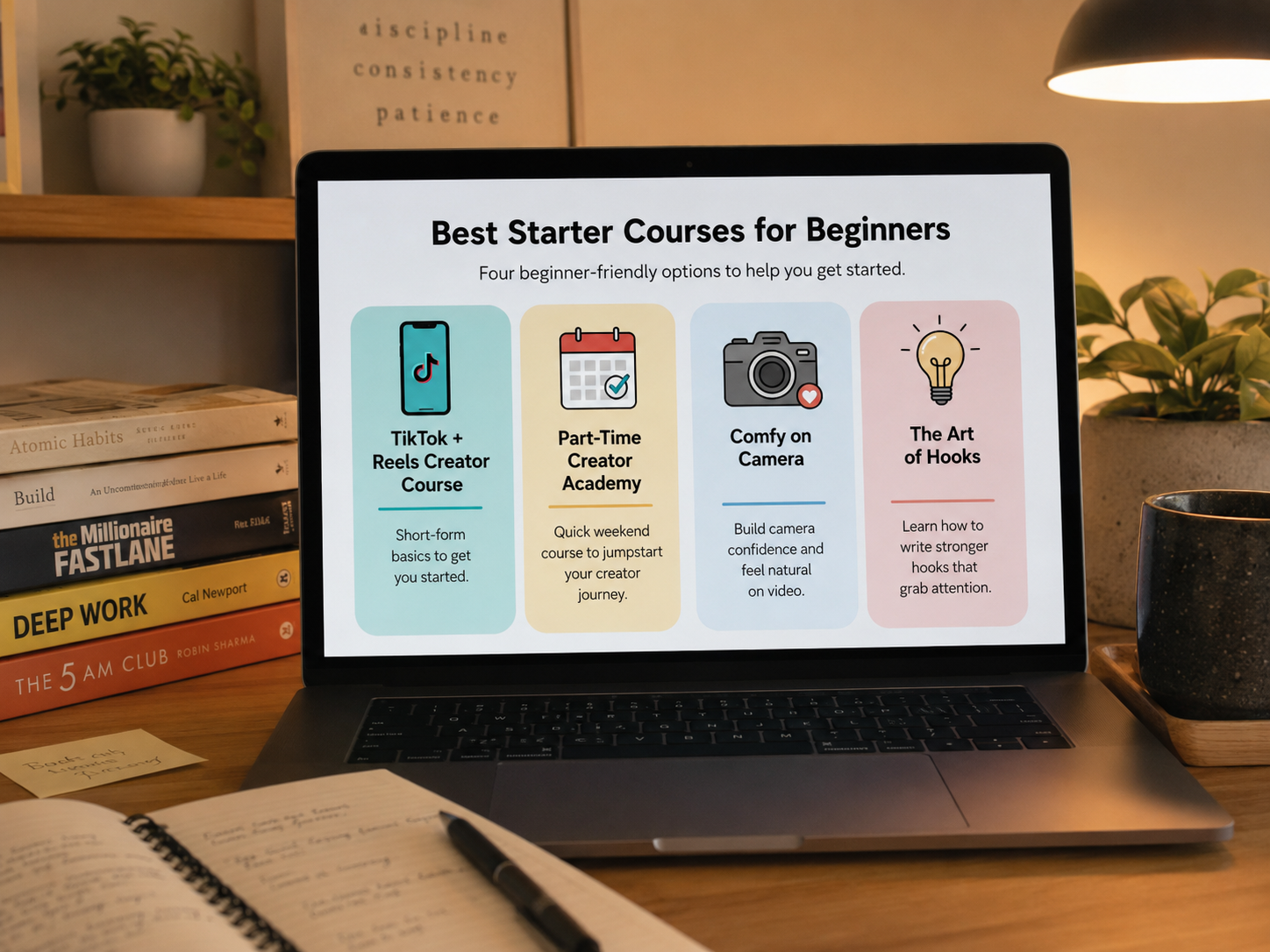
If you want a guided way to turn ideas into clear outlines and repeatable content, the AI Creator Course may be worth reviewing. I would look at it as a structure tool, not a shortcut that replaces your own opinions or experience.
Time needed: 60 to 90 minutes
Now create the main piece without stopping to polish every line.
If you are writing, get the rough draft down first. If you are filming, record the full video before worrying about captions, clips, or thumbnails.
Trying to edit while you create slows everything down. Give yourself permission to make a rough first version.
Time needed: 45 to 60 minutes
Go back to the main piece and pull out the strongest parts. Look for one useful tip, one surprising point, one short story, and one practical checklist.
Each of those can become a smaller post.
For example, a 1,500-word article can give you a short video script, a five-step text post, a quick email, and several headline ideas.
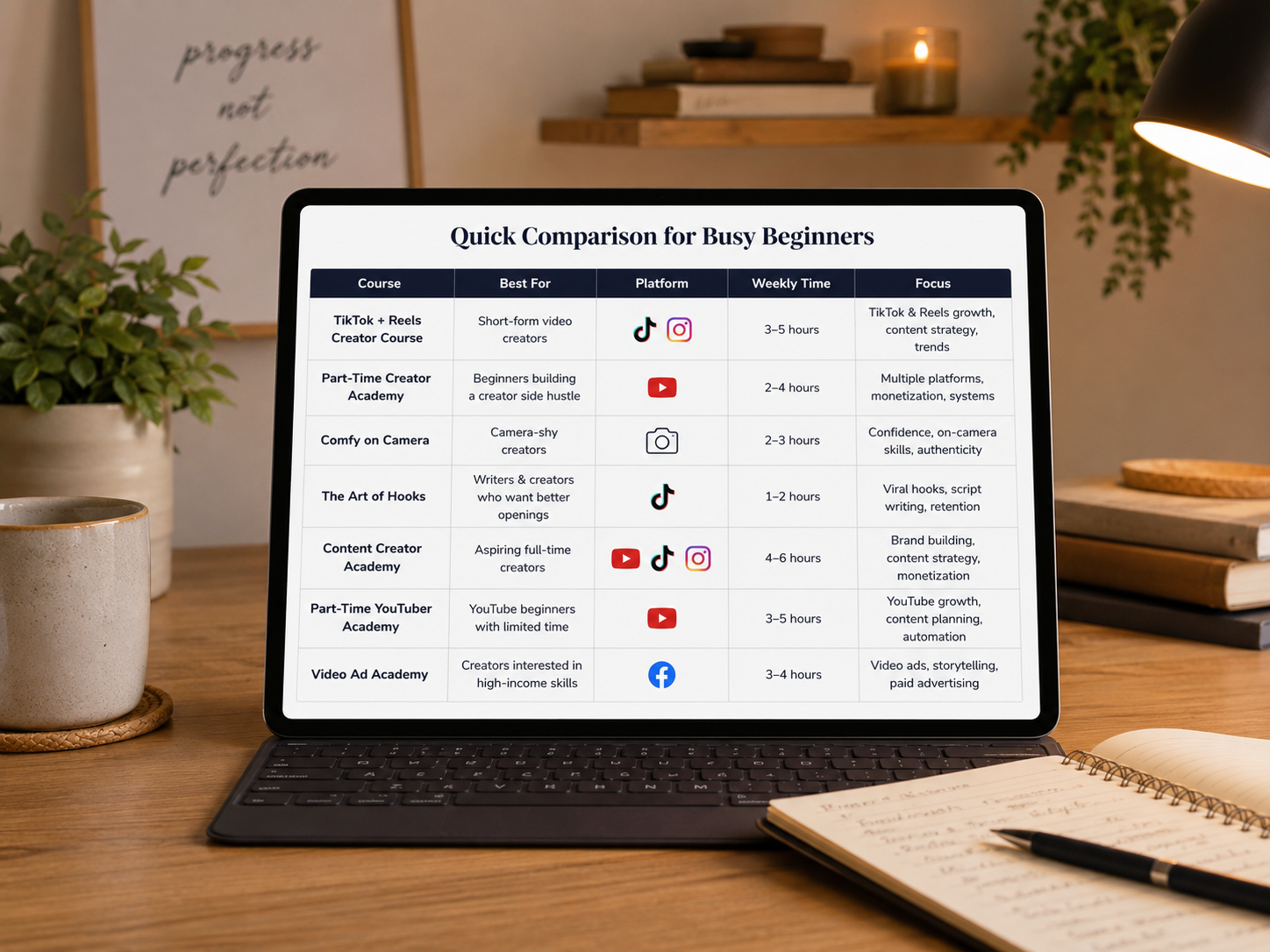
If short-form video is a major part of your plan, the TikTok + Reels Creator Course is the more focused option because it is built around creating and publishing short videos instead of trying to cover every type of content.
Time needed: 30 to 45 minutes
This is the cleanup session. Tighten the writing, check the opening, add links, prepare the captions, and schedule what you can.
You do not need to schedule an entire month. Just getting the next week ready can remove a lot of daily pressure.
Some weeks will not give you an uninterrupted hour. That does not mean the whole plan has to collapse.
Break each task into something you can finish in 15 to 30 minutes.
The important part is knowing the next small task before the time appears. A 20-minute window is useful when you already know what to do. It disappears quickly when you spend the first 15 minutes deciding.
A few reusable tools can make every batching session easier.
Use the same simple structure for most of your posts:
You can change the details without rebuilding the structure every time.
Keep a list of prompts that help you think, such as:
These questions are useful whether you are planning alone or using a writing assistant to organize your thoughts.
A checklist removes the need to remember every little publishing step when you are already tired.
Planning 30 posts can sound productive until you reach post number six and start questioning every life choice that brought you there.
Start with one week. Once that feels normal, you can work further ahead if it actually helps.
You do not need a separate strategy for every app.
Choose one main platform and one secondary place to reuse the content. Build a reliable process before adding more.
A weekly theme makes batching much easier. It also gives your audience several chances to understand the same useful idea.
Do not spend 45 minutes fixing the first paragraph before the rest exists. Draft first. Edit later.
A new app might save a few minutes, but switching tools every week can cost more time than it saves.
Choose a simple setup and keep using it long enough to become comfortable.
For most busy creators, one or two weeks is enough.
Working too far ahead can make the content feel stale or lock you into ideas you no longer care about. Working only one day ahead keeps you under constant pressure.
A one-week buffer is a good middle ground. It gives you breathing room without turning content planning into a giant production.
You can also keep a few evergreen posts ready for the weeks when work gets intense or family life needs more attention.
It can, but only if you treat batching like a factory.
The goal is not to remove your personality. It is to handle the repetitive parts together so you have more energy for the parts that actually need you.
Your stories, opinions, examples, and sense of humor should still come from you. A system helps you organize those things. It should not flatten them.
Before scheduling anything, read it once and ask, "Would I actually say this to a friend?" If the answer is no, rewrite it in normal language.
My honest take is that content batching works best when it feels almost boring.
You know what topic you are covering. You know what task comes next. You know when you are done for the week.
That is much better than feeling inspired on Monday, overwhelmed on Wednesday, and guilty by Friday.
Start with one main idea and two or three smaller posts. Give yourself three to five hours across the week. Use templates, outlines, and simple checklists so you are not rebuilding the process every time.
You do not need unlimited time. You need fewer decisions.
And if a week goes sideways because work explodes, somebody gets sick, or your kid suddenly remembers a school project at 9 p.m., do not throw away the whole system. Publish less, move the schedule, and start again next week.
Consistency is not about never missing. It is about having a simple way to come back.
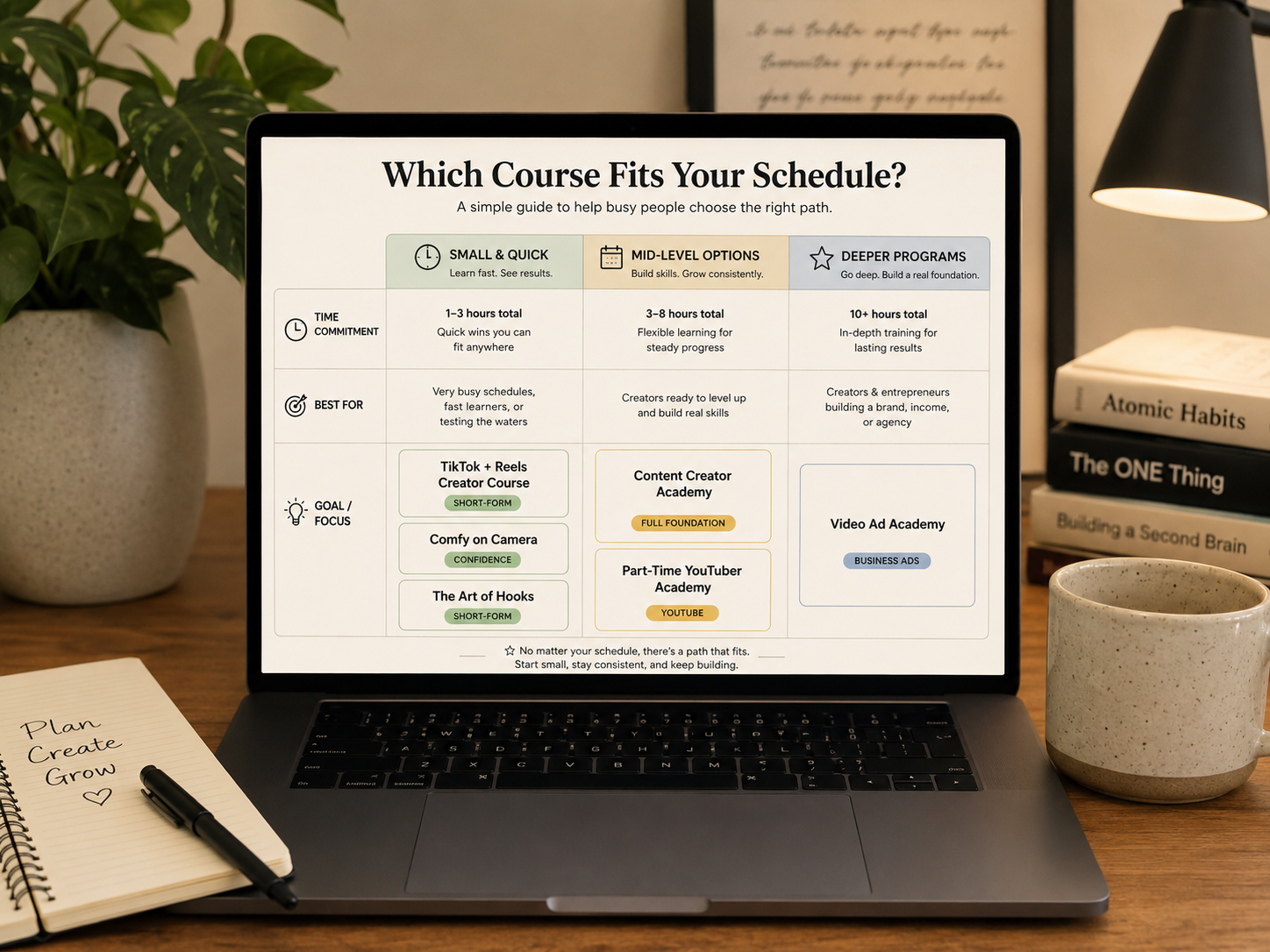
If you want more structure for turning ideas into finished content, you can take a closer look at One Peak Creative's creator courses and decide whether one of the focused programs fits the part of your process that keeps slowing you down.
Keep it simple. Make one useful thing. Turn it into a few smaller pieces. Then go spend the rest of your week on the people and responsibilities that matter more than another post.
Disclosure: I may receive affiliate compensation for some of the links below at no cost to you if you decide to purchase a paid plan. You can read our affiliate disclosure in our privacy policy. This site is not intending to provide financial advice. This is for entertainment only.


